

Comforted or Controlled? (John 10:28, 29; LD 1)
Most comforts belong to certain moments—a warm blanket for a cold night, a favorite flannel for a casual afternoon. But the Heidelberg Catechism begins with a startling claim: there is one comfort that fits every circumstance, in life and in death. That comfort is not found in self-determination or achievement, but in belonging—body and soul—to our faithful Savior, Jesus Christ. He redeems, preserves, and intercedes for his sheep so that they will never perish and can never be snatched from his hand.
Procrastinator or Strategic Planner?(Esther 5:1-14)
As Esther enters the king’s court uninvited, the fate of God’s people hangs in the balance. After a three-day fast, she stands between courage and compromise, strategy and fear. What appears to be hesitation is actually wisdom at work, as God quietly moves his plan forward. Even when his people seem weak and his name is unspoken, the Lord’s decree still stands.
A Different Kind of Death: Understanding Union with Christ (Romans 6) | Devoted to God Series (Chapter 4)
What does it mean to be dead to sin and alive to God? In this episode, we explore Romans 6 and Sinclair Ferguson’s teaching on union with Christ, baptism, and the freedom believers have to live in their new identity.

Elite Doctrine or Rich Comfort? (John 3:1-21; COD Conclusion)
The Canons of Dort addresses critical questions about God's sovereignty and human free will, but its true purpose is pastoral: to provide genuine consolation in knowing that God desires, chooses, and gives life to His people. This teaching leads believers toward Scripture, submission to God's Word, and ultimately to His glory.
The challenge is navigating the tension between God's universal call and particular work. John 3 shows us both truths: the general call is real ("God so loved the world"), and the particular application of Christ's work to God's people is also real (one must be "born again" to respond). Like the wind, the Spirit "blows where it wills"—we cannot control God's work, which is both humbling and liberating.
Our hope rests in Christ, not ourselves. When we bow the knee to Christ, it's because we've been born from above by the Spirit. Our confidence is in His power to uphold us until the end.
Persia’s Queen or Israel’s Queen? (Esther 4:1-17)
Esther chapter 4 brings the queen to a crossroads. She must choose between protecting her own comfort or risking everything to save her people. Through flawed characters and quiet providence, God shows that He can accomplish His purposes even through unlikely servants.
Prepositions of Grace (Devoted to God Series)
I have been crucified with Christ. It is no longer I who live, but Christ lives in me." Galatians 2:20 reveals the heart of Christian sanctification: holiness doesn't happen apart from Christ—it happens IN Christ. Through four prepositions (for, in, with, in), Paul shows us we're not just observers but united to Jesus Himself. We don't believe in Him; we believe in Him. When he died, we died. When He rose, we rose. Stop living like spiritual paupers, striving in your own strength. You've been given union with the Son of God. Sanctification isn't just turning from sin—it's turning TO Christ, basking in His glory, and moving in His resurrection life.

New Creatures in an Old World (2 Corinthians 5:16-21)
Discover how the gospel reshapes identity in a culture of confusion. In Christ, we’re made new—reoriented to see others through grace and called to live out reconciliation. The old has passed; the new has come.
What's With Life and Death?
What is your only comfort in life and death? This timeless question from the Heidelberg Catechism offers a profound answer that our world desperately needs to hear: you belong—body and soul—to your faithful Savior, Jesus Christ. In this sermon, we explore how biblical hope isn't about optimism or self-effort, but about confident expectation grounded in God's faithfulness. You are not your own. You don't belong to your guilt, shame, or fear. You belong to Christ, who has claimed you, redeemed you, and covenanted with you before you could ever choose Him.
All of Me (Chapter 2)
What does it mean to be devoted to God with all of life? In Chapter 2 of Devoted to God, Sinclair Ferguson unpacks Romans 12:1–2 to show how sanctification flows from the gospel, transforms our bodies and minds, and reveals the goodness of God’s will as we are conformed to Christ.
For They Were Not of Us (1 John 2:18-25; COD Head 5 RE)
The Canons of Dort remind us that perseverance is not grounded in our spiritual strength, but in Christ’s preserving power. When some depart from the faith, John does not tell believers to look inward for hidden signs or elite knowledge. Instead, he directs us outward—to Christ, who continues his priestly work by interceding for his people. True assurance does not come from the quality of our faith, but from the faithfulness of our Savior, who prays that our faith will not fail.
When God’s Promises Seem to be Failing (Esther 2:19-3:15)
The book of Esther confronts a haunting question: when God seems silent and His people face destruction, can His promises still stand? Set in a foreign empire ruled by absolute power, Esther reveals a hidden battle between the decree of man and the decree of God. As Haman plots genocide and Mordecai refuses to bow, the story presses one central tension—has the Lord forsaken His role as shield and defender? Yet even through imperfect people and unseen providence, God proves faithful, triumphing over the serpent’s seed and preserving His redemptive promise.
What is Biblical Holiness? (The Ground Plan)
What does it truly mean to be holy? Exploring 1 Peter 1:1–7 through Sinclair Ferguson’s teaching, this post unpacks holiness as belonging entirely to God. From God’s eternal purpose to the refining role of trials, we discover how the Father, Son, and Holy Spirit work together to bring about our sanctification and preserve us for glory.
Persevere in God's Preservation (1 Peter 1:3-9; COD Head 5)
The Christian life is not easy sailing, but a journey of perseverance upheld by God’s preserving power. Anchored in Christ, refined through trials, and guarded by God’s strength, believers press forward with confidence, knowing their inheritance is secure and their Savior faithfully preserves them.
God's Myrtle or Persia's Star? (Esther 2:1-18)
The Book of Esther shows how God works even in silence. From King Xerxes’ pride to Esther’s rise, the story reveals His providence through unexpected heroes. Even in exile, God protects His people, fulfilling His promises through the seemingly weak. This week we consider divine sovereignty, human ambition, and faithful courage in the face of uncertainty.
Is Holiness Up to You? The Gospel Mystery of Sanctification Explained
Confused about sanctification? Discover how God transforms His people as we explore Sinclair Ferguson’s Devoted to God, growing in holiness through faith, not effort, and resting in the joy of His Spirit.
Called to Persevere (Psalm 32; COD Head 5 Arts 1-8)
Psalm 32 shows us that perseverance is not spiritual cruise control. David knew the misery of hidden sin, the crushing weight of God’s discipline, and the joy of restored fellowship. His story teaches us that God does not abandon His people when they fall, but lovingly presses them toward repentance and renewal. The Canons of Dort echo this same hope: believers may stumble, but the Lord faithfully brings them back, preserving them by His grace until the end.
Intro to Esther: King of Kings? Or King Headache? (Esther 1:1-22)
The Book of Esther is more than a heroic tale—it's divine satire revealing God's faithfulness through imperfect people. From King Xerxes’ pompous vanity to Queen Vashti’s principled defiance, the story exposes human weakness while highlighting God’s sovereign control. Even in exile, when His people compromise and stumble, God orchestrates events to fulfill His promises, demonstrating that true deliverance comes not from human heroes, but from the Lord Himself.
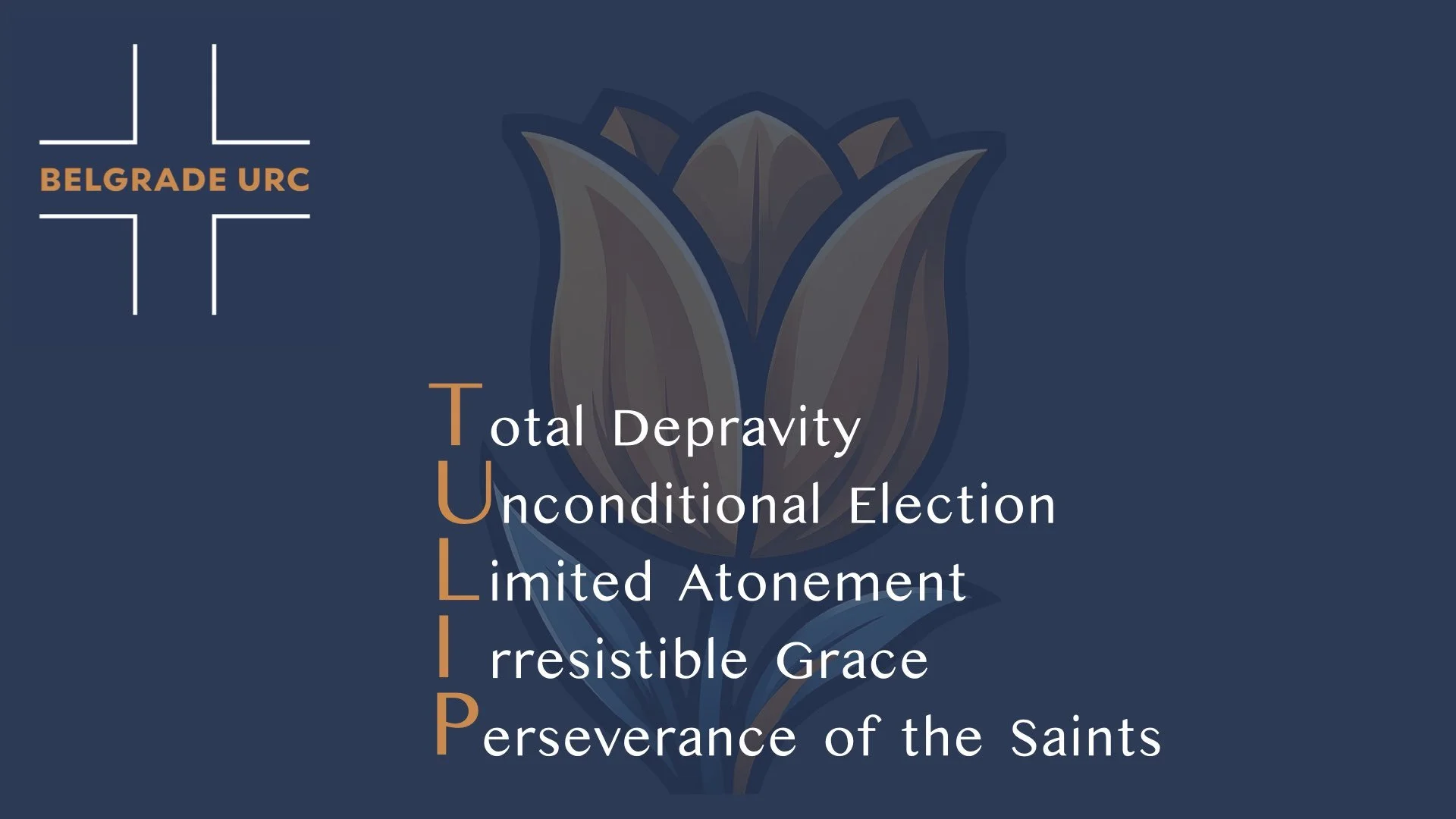
Called to Willingly Obey (Philippians 2:12-18; COD Head 3, 4 RE 6-9)
This post explores Philippians 2:12–13 and the Canons of Dort, showing that salvation and obedience flow from God’s transforming grace. Grace doesn’t just offer help—it renews the heart, empowering believers to live faithfully in Christ. We work because God works in us, producing joy‑filled obedience.

God's Family: Consecrated in Perfection (Matthew 3:13-17; Luke 3:21-22)
This sermon explores Christ’s baptism through the complementary Gospel accounts of Luke and Matthew, showing how each evangelist emphasizes a distinct theological perspective without contradiction.
Luke highlights humility, reversal, and inclusion, revealing a kingdom where God exalts the lowly and forms a new family grounded in grace rather than status.
Matthew emphasizes fulfillment, covenant faithfulness, and judgment, presenting Jesus as Israel’s Messiah who relives and completes Israel’s story by submitting to divine judgment to “fulfill all righteousness.”
Together, these accounts reveal baptism as the moment Christ publicly consecrates Himself to bear judgment for His people and secure true peace with God. Jesus is shown to be both the humble King and the righteous Judge, welcoming outsiders while confronting self-righteousness. The family of God is not built on merit or despair, but on redemption accomplished by Christ alone. True shalom is found only in Him, calling all people, exalted and humble alike, to find their identity, confidence, and life in Christ, the great equalizer.
What is a Spiritual Person? (COD Heads 3,4; 1 Cor. 2:14-16)
Explore the profound contrast in 1 Corinthians 2 between the natural person, who sees the gospel as folly, and the spiritual person. The spiritual person is regenerated by the Holy Spirit and begins to conform to Christ's mind. Drawing from the Canons of Dort, this teaching dismantles misconceptions of "carnal" vs. "super-spiritual" Christians, revealing that true maturity rests in humble dependence on Christ's cross and resurrection. Grace doesn't merely assist; it radically renews hearts for joyful obedience. Discover how to live a discerning life through the gospel, for God's glory alone.