


The Parable of Two Prayers (Luke 18:9-14)
In Luke 18:9–14, Jesus contrasts two prayers that reveal two very different hearts. The Pharisee trusts in his own righteousness and compares himself favorably to others, while the tax collector comes with nothing but a plea for mercy. Christ's verdict overturns every human expectation.
This sermon explores the danger of self-righteousness, the beauty of humility, and the gospel truth that sinners are justified not by their works but by God's grace through faith in Christ alone.
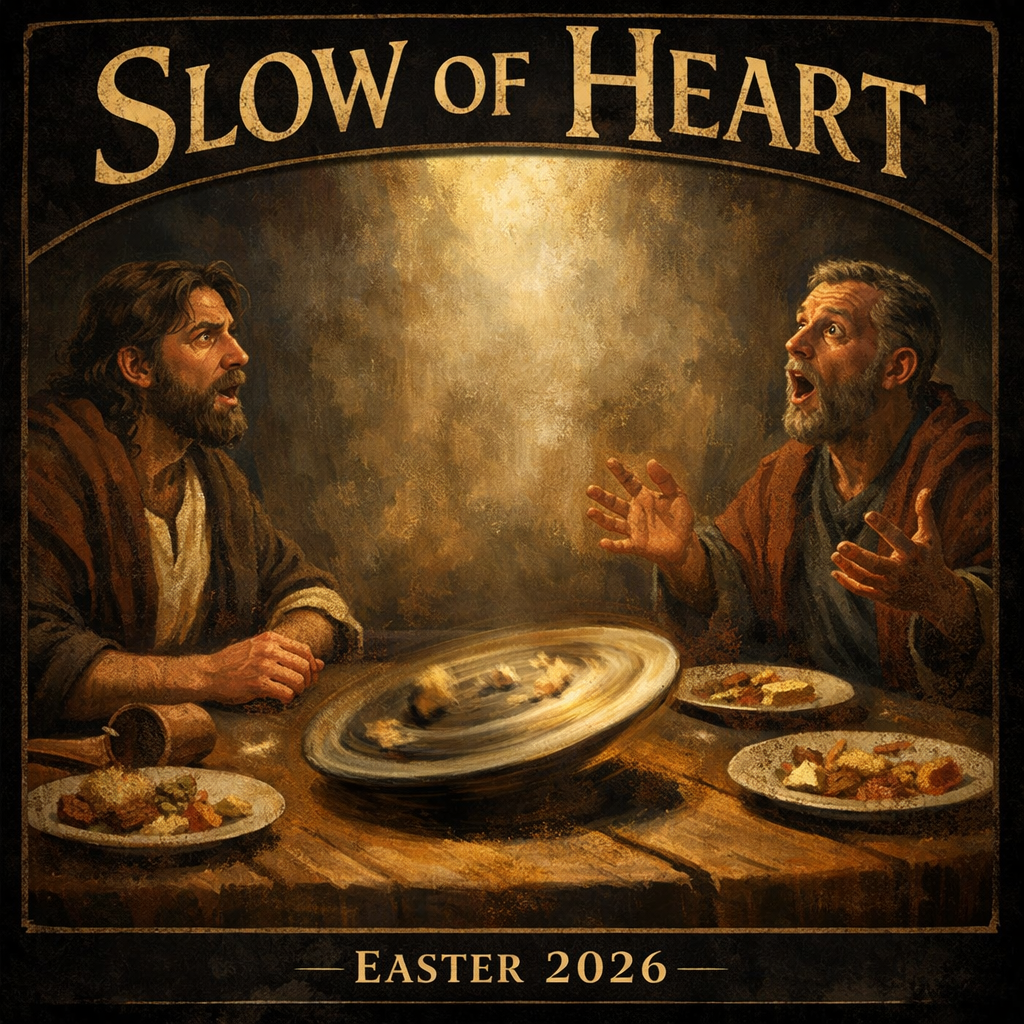
Slow of Heart (Luke 24:25-27)
Slow of heart and clouded by expectation, the disciples on the road to Emmaus could not reconcile a suffering Messiah with their hopes for glory. Yet the resurrection reveals what they missed: Christ’s suffering was not failure, but the very path to victory. In rising from the grave, God vindicates His Son, overturns the verdict of earthly courts, and confirms every promise spoken through the prophets. Even in their confusion, Christ does not abandon His followers—He walks with them, teaches them, and welcomes them to the table.
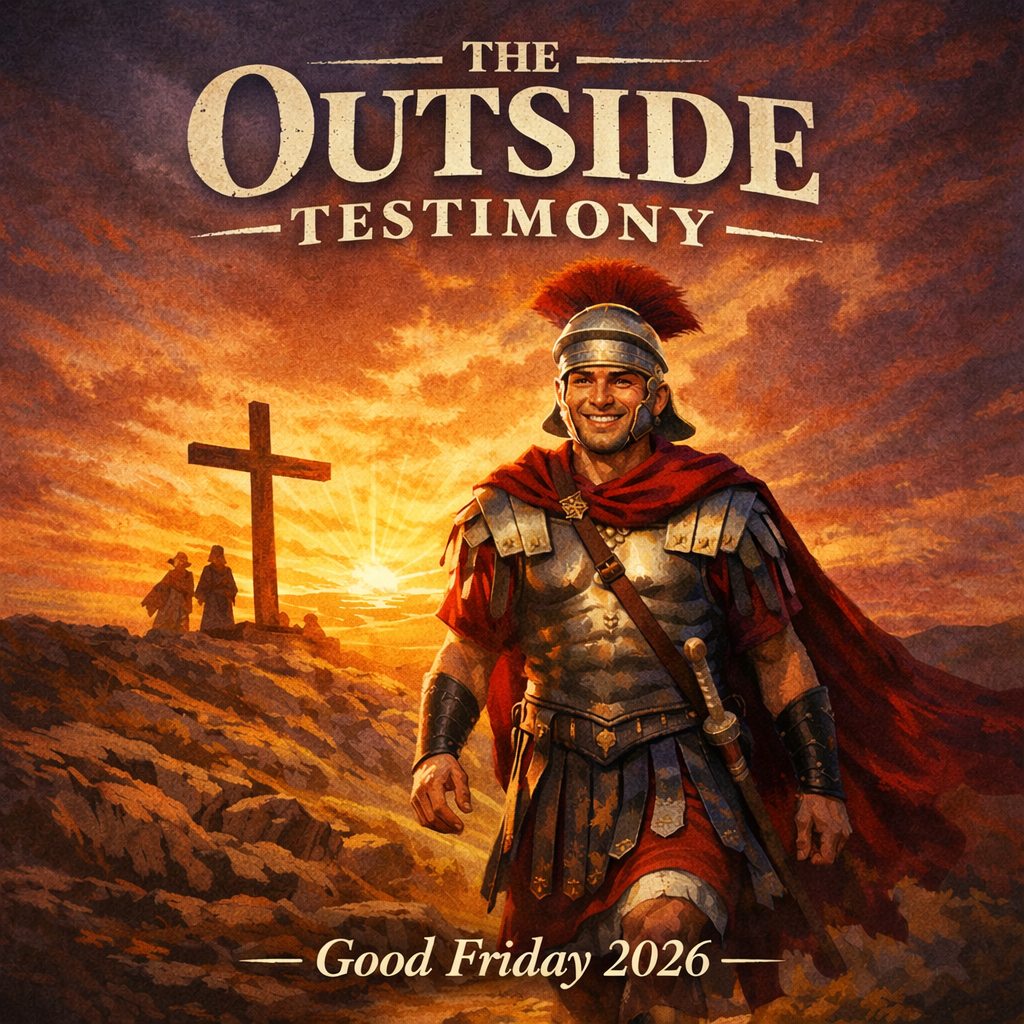
Good Friday: The Outside Witness (Luke 23:47)
In a moment of profound injustice, when everything appears lost, a hardened Roman centurion sees what others miss. He watches the innocent Christ suffer without resistance, hears Him pray for His enemies, and witnesses a death unlike any other.
This is no ordinary execution. This is no failed revolutionary.
And so the man who has seen everything, who trusts nothing lightly, speaks the truth: this man is righteous.
While others grieve from a distance, the centurion draws near in understanding. He sees that this suffering is not accidental—it is purposeful. The righteous servant is bearing the weight of sin.
This is what makes Good Friday good.

God's Family: Consecrated in Perfection (Matthew 3:13-17; Luke 3:21-22)
This sermon explores Christ’s baptism through the complementary Gospel accounts of Luke and Matthew, showing how each evangelist emphasizes a distinct theological perspective without contradiction.
Luke highlights humility, reversal, and inclusion, revealing a kingdom where God exalts the lowly and forms a new family grounded in grace rather than status.
Matthew emphasizes fulfillment, covenant faithfulness, and judgment, presenting Jesus as Israel’s Messiah who relives and completes Israel’s story by submitting to divine judgment to “fulfill all righteousness.”
Together, these accounts reveal baptism as the moment Christ publicly consecrates Himself to bear judgment for His people and secure true peace with God. Jesus is shown to be both the humble King and the righteous Judge, welcoming outsiders while confronting self-righteousness. The family of God is not built on merit or despair, but on redemption accomplished by Christ alone. True shalom is found only in Him, calling all people, exalted and humble alike, to find their identity, confidence, and life in Christ, the great equalizer.
God’s Family: Simple and Lowly People (Luke 2:1-20)
Luke’s birth narrative turns expectations upside down. The true King enters history unnoticed by insiders but welcomed by outsiders. Through mangers, shepherds, and quiet faithfulness, Luke shows that Christ comes not to the worthy, but to make the unworthy worthy.

God's Abandoned Family? (Luke 24:36-53)
As we conclude our study of Luke’s Gospel, we see Christ revealing His glorified body to His disciples, offering peace, fellowship, and assurance. Even in doubt and human failure, His mercy endures. Christ fulfills God’s promises, opens the Scriptures, and invites us into communion with Him. Today, we live in the reality of His resurrection, drawing near to Him and anticipating the eternal feast at His table.
Heaven’s Veto (Luke 24:1-35)
The crucifixion was Rome’s brutal method of deterrence—designed to kill slowly, publicly, and shamefully. Yet in Christ’s death, the irony emerges: the only innocent man is executed like a covenant-breaker, showing that this fallen age is not our rest. Though Rome miscarries justice, heaven overturns that miscarriage. Christ’s death is not a failure but the planned means to bear sin’s penalty and undo the consequences of the fall; his resurrection is necessary to vindicate his innocence.
At the empty tomb, the women discover angels who remind them of Jesus’ promise that he would rise. Instead of preparing Christ for burial, they learn that Christ is the one preparing his people for glory.
On the road to Emmaus, two disciples lament Jesus’ death and dismiss the women’s testimony. Jesus, unrecognized, rebukes their slowness of heart and interprets the Scriptures, showing that the Messiah had to suffer and rise. Their problem—and ours—is failing to grasp both the depth of sin and the power of the resurrection working within us.
When they invite the stranger to stay, Jesus reveals himself in the breaking of bread. This encounter shows that Christ’s suffering was not a detour but the necessary fulfillment of God’s redemptive plan. His patience, presence, and teaching prepare believers for glory.
The conclusion emphasizes that the cross shows the depth of sin, but the resurrection shows the triumph over it. Christ’s resurrection is heaven’s veto of the world’s death sentence, giving believers new life now and a guaranteed inheritance in eternity. Because Christ is raised, Christians move forward with confidence, knowing Christ is their shield, defender, and victorious Lord of life.
Tragic and Glorious Will (Luke 23:26-56)
The cross of Christ, often viewed as a sanctified symbol, exposes humanity’s sinfulness and the need for redemption. Luke’s account shows the irony and glory of the gospel—from Simon carrying the cross, to the repentant thief, to the centurion and Joseph of Arimathea—revealing that Christ’s death is not failure but the completion of His redemptive work.
Kangaroo Court (2) (Luke 23:1-25)
When Jesus stands before Pilate and Herod, both rulers find Him innocent, yet the crowd demands the release of Barabbas, the rebel. Their choice exposes humanity’s deep tendency to prefer earthly power over God's redemption.
The Kangaroo Court (Luke 22:54-71)
Christ’s kingdom turns the world upside down—not through power or fear, but through peace. As Peter’s failure and Christ’s silence unfold in Luke’s Gospel, we see that true strength is found not in human resolve, but in the Savior’s submission. The King who was mocked and beaten was already winning the greatest battle of all—redeeming sinners and restoring peace with God.
The Sword's Snare (Luke 22:39-53)
In a world that either exaggerates or ignores the devil’s influence, this message calls believers to recognize the unseen battle of spiritual warfare. True victory isn’t found in self-reliance but in humble prayer and dependence on Christ, who conquered the enemy through His suffering and resurrection.