

Worship 10 am & 6 pm
Belgrade United Reformed Church
17333 Frontage Road
Belgrade, MT 59714

Persevere in God's Preservation (1 Peter 1:3-9; COD Head 5)
The Christian life is not easy sailing, but a journey of perseverance upheld by God’s preserving power. Anchored in Christ, refined through trials, and guarded by God’s strength, believers press forward with confidence, knowing their inheritance is secure and their Savior faithfully preserves them.
God's Myrtle or Persia's Star? (Esther 2:1-18)
The Book of Esther shows how God works even in silence. From King Xerxes’ pride to Esther’s rise, the story reveals His providence through unexpected heroes. Even in exile, God protects His people, fulfilling His promises through the seemingly weak. This week we consider divine sovereignty, human ambition, and faithful courage in the face of uncertainty.
Is Holiness Up to You? The Gospel Mystery of Sanctification Explained
Confused about sanctification? Discover how God transforms His people as we explore Sinclair Ferguson’s Devoted to God, growing in holiness through faith, not effort, and resting in the joy of His Spirit.
Called to Persevere (Psalm 32; COD Head 5 Arts 1-8)
Psalm 32 shows us that perseverance is not spiritual cruise control. David knew the misery of hidden sin, the crushing weight of God’s discipline, and the joy of restored fellowship. His story teaches us that God does not abandon His people when they fall, but lovingly presses them toward repentance and renewal. The Canons of Dort echo this same hope: believers may stumble, but the Lord faithfully brings them back, preserving them by His grace until the end.
Called to Willingly Obey (Philippians 2:12-18; COD Head 3, 4 RE 6-9)
This post explores Philippians 2:12–13 and the Canons of Dort, showing that salvation and obedience flow from God’s transforming grace. Grace doesn’t just offer help—it renews the heart, empowering believers to live faithfully in Christ. We work because God works in us, producing joy‑filled obedience.
What is a Spiritual Person? (COD Heads 3,4; 1 Cor. 2:14-16)
Explore the profound contrast in 1 Corinthians 2 between the natural person, who sees the gospel as folly, and the spiritual person. The spiritual person is regenerated by the Holy Spirit and begins to conform to Christ's mind. Drawing from the Canons of Dort, this teaching dismantles misconceptions of "carnal" vs. "super-spiritual" Christians, revealing that true maturity rests in humble dependence on Christ's cross and resurrection. Grace doesn't merely assist; it radically renews hearts for joyful obedience. Discover how to live a discerning life through the gospel, for God's glory alone.
Passive and Mindless Muppets ? (COD Head 3,4; Acts 13:48)
We are not puppets but renewed people shaped by grace. The gospel’s sincere call both invites and transforms, revealing a sovereign Savior worthy of our trust and worship.

God's Family: Stranger Danger (Matthew 2:1-12)
In Matthew’s Gospel, we find two kinds of people in God’s kingdom. There are those inside and there are those outside the covenant line. The surprising truth is that the outsiders, represented by the Magi, are the ones who recognize and worship Christ, while the insiders, represented by Herod and Jerusalem, miss His coming. This message challenges us to consider where true belonging in God’s family comes from—not heritage or status, but faith in Jesus Christ. Through the story of the Magi, Matthew reveals that Christ came to bring even the farthest outsiders into His family, transforming strangers into beloved sons and daughters of God.
For Whom Does Christ Pray? (John 17:4, 9, 20-21; COD 2)
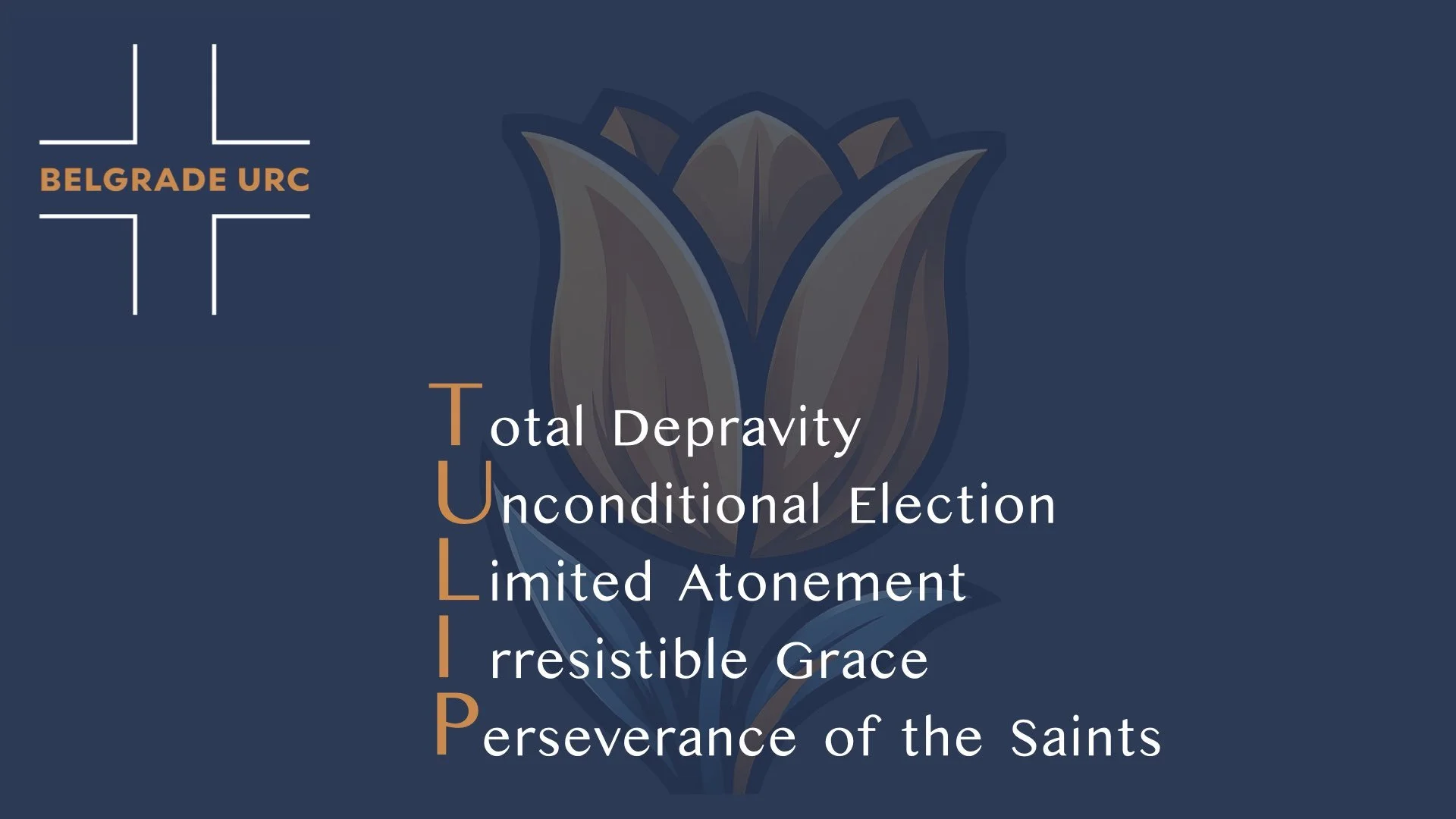
This sermon explores the doctrine of limited atonement through John 17, showing that Christ’s death is not a vague, potential redemption but a finished work for a particular people the Father has given Him. Rather than fueling elitism, this truth humbles believers: faith does not save us; Christ saves. Faith is the Spirit’s gift that compels us to cling to Him to receive all Christ’s distinct benefits. Christ’s high priestly prayer reveals His heart. Christ prays for his people. Christ desires eternal fellowship with the people that God has given to Christ. This does not make us complacent, but we live in the confidence that Christ’s work will complete his intended result.
God’s Family: Joseph Son of David (Matthew 1:17-25)
This sermon reflects on how God faithfully works through broken family lines, centering on Joseph as the quiet, righteous link between David’s promises and Christ’s birth. Matthew’s genealogy reveals that God does not need perfect people, but uses flawed, ordinary sinners to bring the Messiah into the world. Joseph’s obedience in taking Mary as his wife, bearing public shame, and naming the child “Jesus, Yahweh saves”, secures Jesus’ legal place in David’s line and displays what true righteousness is: humble trust in God’s redemptive plan. Through Emmanuel, “God with us,” God triumphs over human sin, fulfills His covenant, and graciously calls us into His family, assuring believers that His promises will never fall flat.

Satan’s Sustenance (I Peter 5:8; LD 52)
Peter reminds us that the Christian life is lived on a battlefield. The devil prowls like a roaring lion, our flesh is weak, and the world pulls us away from God. Yet Christ calls us to be sober-minded, watchful, and firm in faith. This reflection on the Heidelberg Catechism’s final petition shows how prayer and dependence on Christ secure our victory when temptation comes.
Willingly Doing Your Will (Titus 2:11-14; LD 49)
Human beings naturally struggle with making God in our image, seeking to bend Him to our desires rather than aligning with His will. Even in the presence of temptation, sin, and our natural rebellion, God calls us to discern what is righteous, putting aside desires contrary to Christ while nurturing those aligned with Him. True obedience comes from humility and vulnerability before God, as we are shaped and refined throughout our lifelong journey of faith.

Twas the Night Before Passover (Luke 22:14-30)
In this sermon, we explore the profound meaning behind Christ’s celebration of the Passover, contrasting it with the familiar but sentimental imagery of "’Twas the Night Before Christmas." Christ’s Passover reveals a radical, costly redemption that goes far beyond simple reward or punishment. It challenges us to recognize our unworthiness and embrace the violent yet life-giving sacrifice of our Savior.
Far from a mere memorial, the Lord’s Supper invites us into ongoing communion with the living Christ, who nourishes and sustains us through his broken body and shed blood. This meal is a powerful reminder that true greatness in God’s kingdom comes not from status or ambition but from humble service and reliance on grace.

Thieving to Thriving (LD 42; Ephesians 4:28)
This post explores how the command not to steal goes beyond obvious theft to include greed, deceptive practices, and misuse of God’s gifts. We look at Ephesians 4:28 and Sinclair Ferguson’s insights, and contrast the old sinful self with the new life in Christ, emphasizing work as worship and the Spirit’s transforming patience. Living in community, generosity, and honesty honors God and reflects our identity as redeemed people.
The Redeemer’s Reaping (Luke 20:1-19)
In a tense confrontation at the temple, Jesus faces the religious leaders’ challenge: “By what authority do you do these things?” Through a powerful parable about a vineyard and its tenants, Jesus exposes their refusal to recognize His divine authority. This story warns of the dangers of relying on covenant identity, heritage, and tradition over true faith. Christ calls all to hear, receive, and live under Christ’s lordship which leads to bearing glorious fruit in God’s vineyard.
Empowered for Chastity (LD 41; 1 Thess. 4:3-8)
God’s law is not a checklist, but it’s a call to heart-deep transformation. When we define the law by our own standards, we may think we’ve kept it. But seen through God’s eyes, it exposes our desires and calls us to something higher: a life of holiness shaped by union with Christ. Adultery, for instance, is more than a physical act. It is a matter of faithfulness to the Lord. This perspective leads us to live not for appearances, but as those empowered by the Holy Spirit, set apart for God’s glory, and living by His standard. It is humbling to realize he must change us, empower us, and continue to shape us throughout our Christian lives.
Holiness is not about willpower or self-help; it’s about walking in the Spirit as redeemed people. We are called to resist sin not by our strength, but through the resurrection power of Christ at work in us. Chastity becomes a way of life. It is a continual walking in integrity, modesty, and love for God. As temples of the Holy Spirit, we live in daily repentance, joyful obedience, and growing conformity to Christ, not to earn His favor, but because we already belong to Him.
The Dirty Temple (Luke 19:45-48)
Jesus’ entry into Jerusalem marks a profound and divided moment. Though welcomed by pilgrims as the Messiah, Christ knows his mission: suffering, death, and ultimately resurrection. The city meant to embody peace and God’s presence ironically fails to recognize its King’s true mission that is not one of earthly conquest but of humble submission and redemptive sacrifice. This tension calls us to reflect on how we receive Christ today: with open hearts or hardened resistance.
This moment also reflects Israel’s long history of faltering leadership and unfulfilled covenant promises. Even the greatest leaders, like Joshua and David, failed to secure lasting peace or faithfulness. Christ enters history to heal this broken and sinful world, not as another flawed king, but as the true Redeemer who confronts false security. HIs cleansing the temple exposes the problem of religiosity that goes all the way back to Jeremiah. His call: to truly seek Him with humility and surrender, embracing the peace He offers through His Word and Spirit, rather than resisting from a place of superficial safety.
Surrender to the Implanted Word (LD 40; James 1:19-21)
The catechism deepens our understanding of murder beyond the physical act of taking life, revealing that murder begins in the heart through anger, hatred, envy, and destructive words or gestures. We are called to honor the image of God by guarding our thoughts and actions, rejecting any behavior that harms our neighbor. True righteousness starts with self-control as we conduct ourselves in wisdom by being slow to speak and slow to anger. James warns us that unchecked anger leads us away from God’s wisdom. This guiding wisdom calls believers to pursue peace, patience, and mercy, reflecting the gospel as saints in the dispersion.
Yet, acknowledging our ongoing struggle with “remaining wickedness,” the teaching urges humility and dependence on God’s continual grace through the implanted Word. Perfect holiness is a lifelong journey powered by God’s transforming Spirit, not human effort alone. By surrendering to God’s work in our hearts, we can live out the fruits of love and gentleness, even amid suffering, and faithfully embody Christ’s peace in a broken and fallen world. This message invites us to a cross-shaped life, constantly shaped by God’s truth and gospel preaching as His redeemed saints.
The Weeping King (Luke 19:28-44)
As Christ approaches Jerusalem from the Mount of Olives, he embodies both fulfillment of prophecy and a radical redefinition of kingship. Rather than entering as a triumphant earthly ruler, he rides a colt that symbolizes humility and peace, which is in direct contrast to common expectations of a messianic conqueror. This act not only highlights Jesus’ divine foreknowledge and connection to the promises of Genesis and Zechariah, but also deeply echoes Psalm 118 and Psalm 148 as the crowds praise him, recalling God’s pattern of deliverance even as the city's fate of judgment is delayed. The Mount of Olives itself amplifies these themes, standing as a key prophetic site where Zechariah envisioned both judgment and deliverance, much like the Red Sea parted in Israel’s history.
The reactions of the Pharisees further reveal the heart of the moment: their insistence that Jesus rebuke the crowds exposes their rejection of him as Messiah. Jesus responds that if the people were silent, even the stones would cry out, referencing John the Baptist’s warning that true children of Abraham are not defined by lineage or covenant status alone, but by embracing Christ in faith. Amid outward jubilation, Jesus weeps over Jerusalem, expressing deep compassion for its spiritual blindness and the peace it fails to receive. This narrative calls for personal reflection—urging each hearer to recognize Christ’s unique mission and kingdom, which are established not by power, but by humility, sacrificial love, and a cross-shaped posture before God.
Stewarding True Riches (Luke 19:11-27)
As Jesus journeys to Jerusalem, He tells a parable that echoes the story of Herod Archelaus, who is a harsh ruler. In fact, his own subjects protested his reign. In the parable, a nobleman departs to receive a kingdom, entrusting his servants with a single mina each. Upon returning, he rewards those who invested wisely with more, but punishes both the rebellious citizens and the servant who protected his mina through burial.
The parable carries both historical familiarity and moral tension. This parable that echos Herod Archelaus is shocking for the audience. You see, the servant who hid his mina may appear cautious, even virtuous, because he does not engage in loan sharking or charge his fellow man interest. The servant is not rebuked for breaking the rules; he’s condemned for failing to act in faith. The kingdom of God, Jesus implies, is not preserved through caution or fear. It grows through bold, obedient trust and living out the gospel in Christ’s Spirit. This parable challenges us to reject passive discipleship. We are not called to simply maintain what we’ve been given, but to take risks for the sake of Christ’s name.
The nobleman is not a one-to-one symbol of Christ, but his story exposes the high calling of discipleship. Jesus’ followers live between His first and second coming, stewarding the gospel with courage and faith. We are pilgrims journeying toward Zion, not clinging to worldly safety, but walking by the Spirit. True wealth and stewardship are not what we accumulate but who we become in Christ. We are empowered in Christ, we live as living sacrifices, and we live in light of Christ’s certain return.